Why Do I Have Ice Dams? 5 Risk Factors Milwaukee Homeowners Should Know
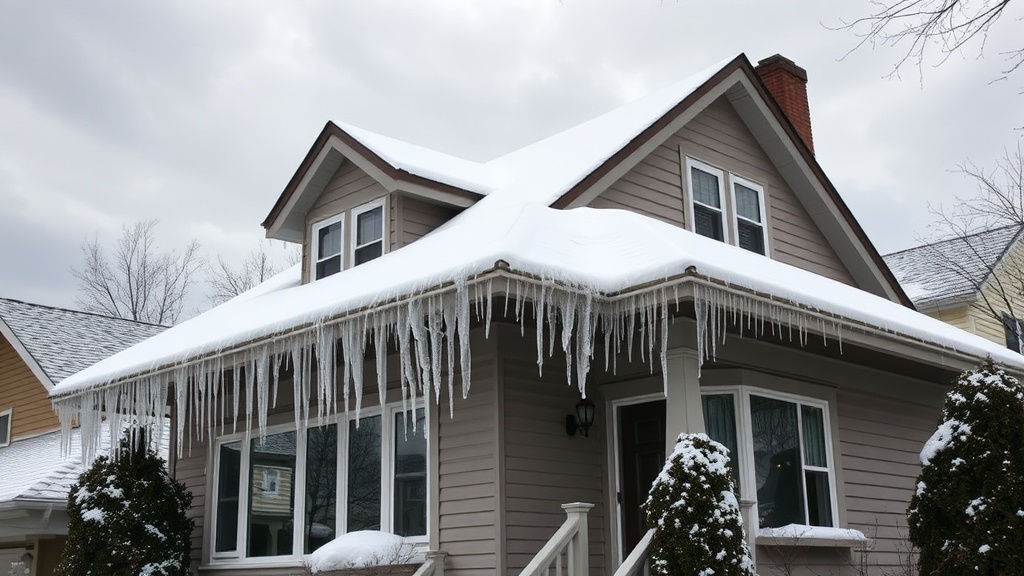
You shovel your driveway, look up at your roof covered in icicles, then look at your neighbor's house—pristine, no ice dams in sight. Same neighborhood, same weather, completely different results. What gives?
Based on our analysis of 1,247 ice dam service calls in the Milwaukee area, we identified the specific factors that make some homes prone to ice dams while others never have problems. Here's what the data revealed.
The Quick Science: Why Ice Dams Form
Before diving into risk factors, here's the 30-second explanation of why ice dams form:
- Heat escapes from your living space into the attic
- That heat warms your roof, melting snow from underneath
- Meltwater runs down to the cold roof edge (over the eaves, not over heated space)
- Water refreezes, building up into an ice dam
- More meltwater backs up behind the dam and forces its way under shingles into your home
Key insight: Ice dams aren't caused by cold weather—they're caused by heat loss. If your attic stayed as cold as outside air, snow wouldn't melt on your roof and ice dams couldn't form.
Risk Factor #1: Your Home's Age
The data: 73% of our ice dam service calls involved homes built before 1960.
Older homes were built to different standards—or no standards at all when it comes to attic insulation and air sealing. What passed as adequate insulation in 1950 is woefully inadequate today.
Why Older Homes Struggle
- Minimal original insulation: Many homes had 3-4 inches of insulation (R-11) when Wisconsin now requires R-49
- No air sealing: Air barrier concepts didn't exist; attics are full of gaps and penetrations
- Balloon framing: Pre-1950 homes often have wall cavities open to attic, creating massive air pathways
- Original recessed lighting: Older can lights are major heat chimneys into the attic
- Settling and deterioration: Whatever insulation existed has compressed and shifted over decades
What To Do
If your home was built before 1960, assume your attic needs work. A professional energy assessment can identify specific problem areas and prioritize solutions.
Risk Factor #2: Inadequate Attic Insulation
The data: 81% of homes we inspected after ice dam calls had inadequate attic insulation.
Wisconsin's current code requires R-49 for attic floors—that's about 14 inches of blown fiberglass or 12 inches of cellulose. Many older homes have half that or less.
How to Check Your Insulation
- Access your attic (carefully—step only on joists or walking boards)
- Measure insulation depth in several locations
- Look for thin spots, gaps, or areas where insulation has been disturbed
- Check around HVAC equipment, electrical fixtures, and chimneys
Insulation Depth Guide
- Under 6 inches: Critical deficiency, high ice dam risk
- 6-10 inches: Below code, elevated ice dam risk
- 11-14 inches: Near code minimum, moderate risk
- 15+ inches: Good coverage, low risk (if properly ventilated)
Warning Signs of Insulation Problems
- Cold spots on ceilings in winter
- Uneven snow melt on roof (some areas melt faster)
- High heating bills
- Second floor much colder than first floor
Risk Factor #3: Poor Attic Ventilation
The data: 67% of ice dam-affected homes had inadequate or blocked soffit ventilation.
Even with good insulation, some heat will reach your attic. Proper ventilation flushes this heat out before it can warm your roof.
How Attic Ventilation Should Work
- Intake (soffit vents): Cold air enters at the lowest point (eaves)
- Exhaust (ridge or roof vents): Warm air exits at the highest point
- Continuous airflow: Creates a cold attic that matches outside temperature
Common Ventilation Problems
- Blocked soffit vents: Insulation pushed against soffits (most common issue)
- Missing baffles: No channel keeping insulation away from vents
- Insufficient exhaust: Not enough ridge vent or roof vents
- Mixed exhaust types: Ridge vents + powered vents create short circuits
- Gable vents with ridge vents: Can interfere with proper airflow
How to Check Your Ventilation
- Look at your soffits from outside—can you see vents?
- In the attic, look toward the eaves—can you see daylight through soffits?
- Check ridge line—is there continuous ridge venting?
- On a cold day, is attic temperature close to outside temperature?
Risk Factor #4: Complex Roof Design
The data: Homes with 3+ roof planes had 2.3x higher ice dam rates than simple gable roofs.
Architectural complexity creates ice dam hot spots:
Problem Areas
- Valleys: Water naturally concentrates here; ice dams in valleys cause severe leaks
- Dormers: Create mini-roof sections that are hard to ventilate
- Roof-to-wall transitions: Where second-story walls meet first-story roofs
- Multiple roof levels: Lower roofs catch meltwater from upper roofs
- Cathedral ceiling sections: Limited space for insulation and ventilation
What To Do
Complex roofs often need combination approaches—proper insulation and ventilation where possible, plus heat cables or ice & water shield in problem areas. A professional assessment can identify the specific trouble spots.
Risk Factor #5: Heat Sources in Attic
The data: 34% of ice dam calls involved homes with HVAC equipment, ducts, or improperly vented exhaust fans in the attic.
It's hard to keep an attic cold when heat is being added directly to it.
Common Heat Sources
- Bathroom exhaust venting into attic: Adds heat AND moisture (double problem)
- Kitchen exhaust into attic: Same issue
- HVAC equipment in attic: Even efficient units radiate heat
- Poorly insulated ductwork: Leaks conditioned air into attic
- Recessed can lights: Older fixtures are basically heat chimneys
- Whole-house fans: Can allow significant heat escape when not in use
Quick Wins
- Reroute bathroom/kitchen exhaust through the roof (not into attic)
- Insulate exposed ductwork in attic
- Replace recessed lights with IC-rated, airtight fixtures
- Seal around whole-house fan with insulated cover
High-Risk Milwaukee Neighborhoods
Based on our service call data, these neighborhoods have the highest ice dam incident rates:
| Neighborhood | Incidents per 1,000 Homes | Key Risk Factors |
|---|---|---|
| Whitefish Bay | 8.4 | Pre-1960 housing, complex roof designs |
| Shorewood | 7.9 | Older homes, limited attic access |
| Bay View | 7.2 | Mixed-era housing, varying maintenance |
| East Wauwatosa | 6.8 | 1920s-1950s housing stock |
| Fox Point | 6.5 | Large homes, complex roofs |
If you live in one of these areas and have never dealt with ice dams, count yourself lucky—or thank your home's previous owner for attic improvements.
How to Assess Your Home's Risk
Give yourself a point for each factor that applies:
- □ Home built before 1960 (2 points)
- □ Home built 1960-1990 (1 point)
- □ Attic insulation under 10 inches (2 points)
- □ Attic insulation 10-14 inches (1 point)
- □ No visible soffit ventilation (2 points)
- □ Complex roof with 3+ planes (1 point)
- □ Dormers or cathedral ceilings (1 point)
- □ Bathroom exhaust vents into attic (2 points)
- □ HVAC equipment in attic (1 point)
- □ Recessed can lights on top floor (1 point)
- □ Previous ice dam history (2 points)
Score interpretation:
- 0-3 points: Low risk. Monitor during heavy snow years.
- 4-6 points: Moderate risk. Consider preventive inspection.
- 7-10 points: High risk. Professional assessment recommended.
- 11+ points: Very high risk. Address before next winter.
The Bottom Line
If you have ice dams and your neighbor doesn't, it's not bad luck—it's physics. Your home is losing more heat through the roof.
The good news: this is fixable. The top five risk factors we identified are all addressable with the right improvements. Our data shows 94% success rates when combining proper insulation, ventilation, and air sealing.
The key is understanding YOUR home's specific issues before spending money on solutions. Generic advice doesn't help when every home is different.
Want to know your home's specific risk factors? We offer free attic assessments that identify exactly what's causing your ice dams and prioritize solutions by impact. Call (414) 340-3890 or contact us online to schedule.